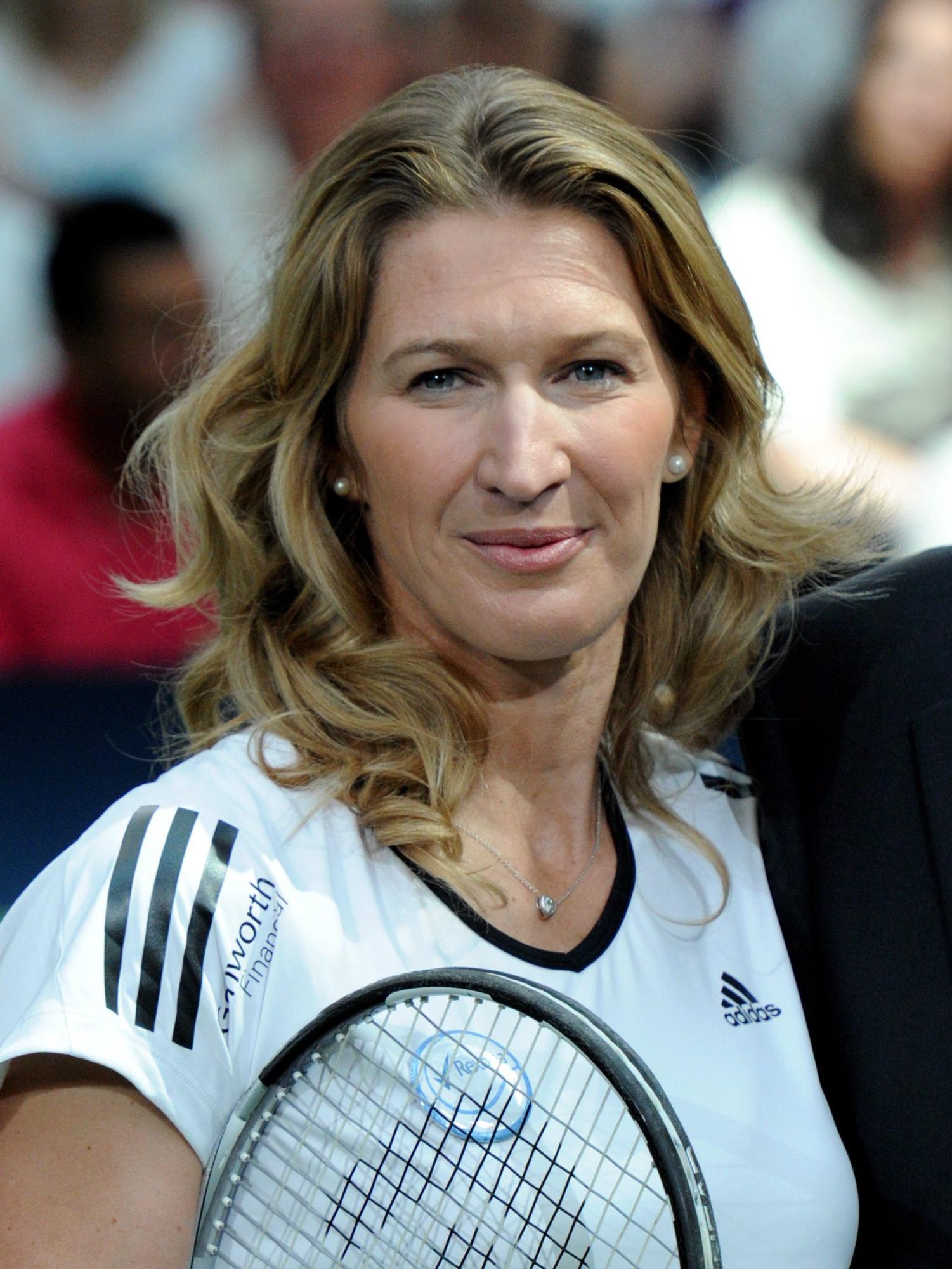
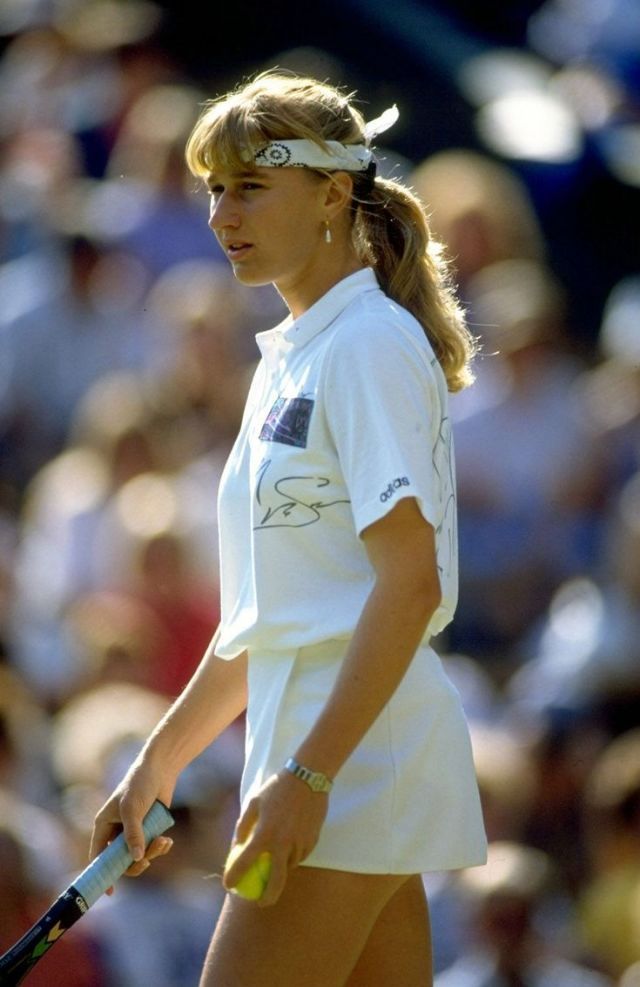
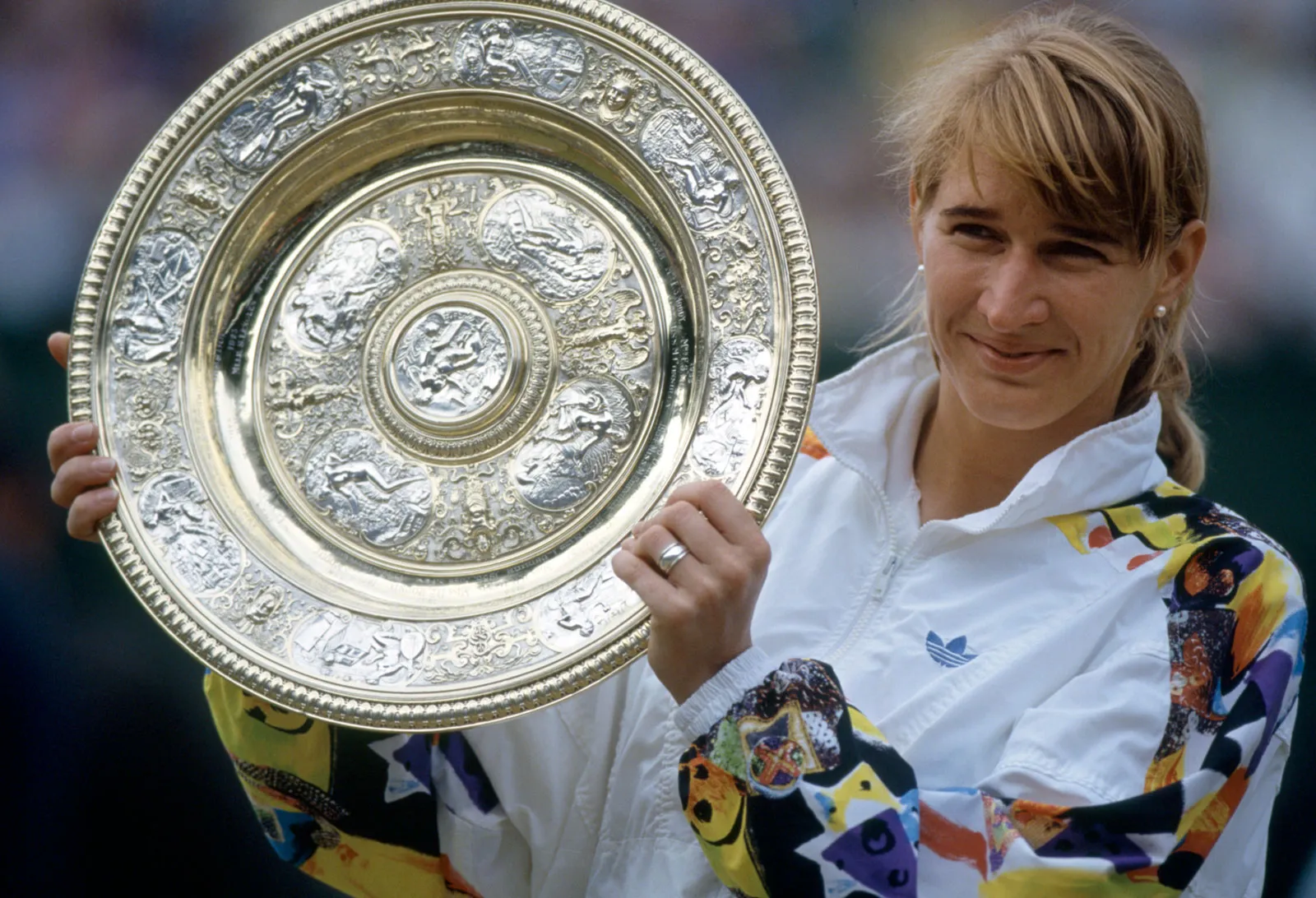
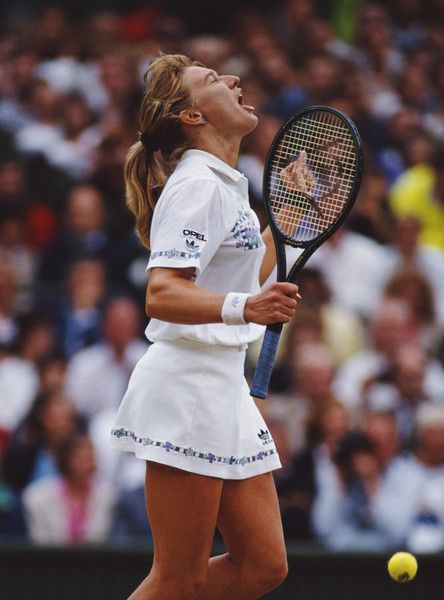
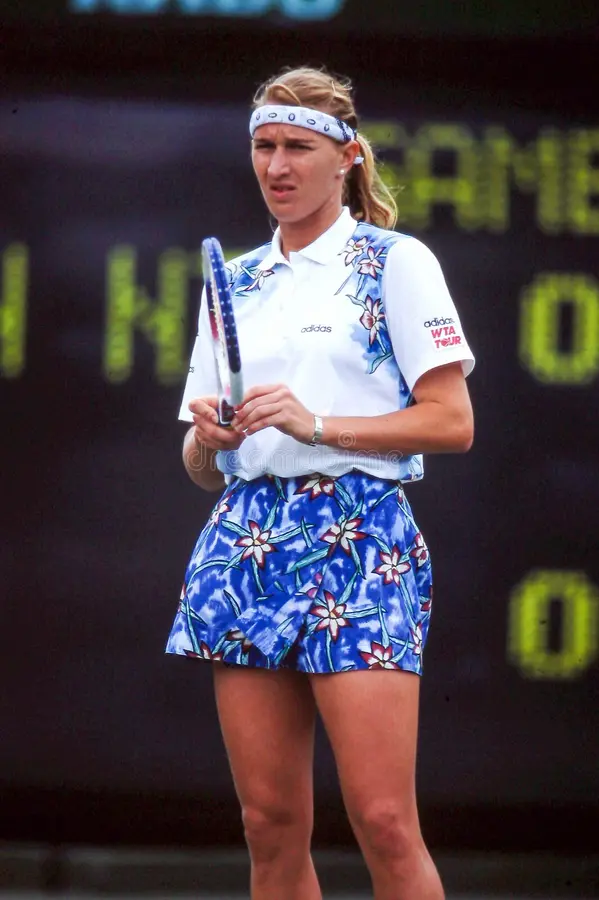
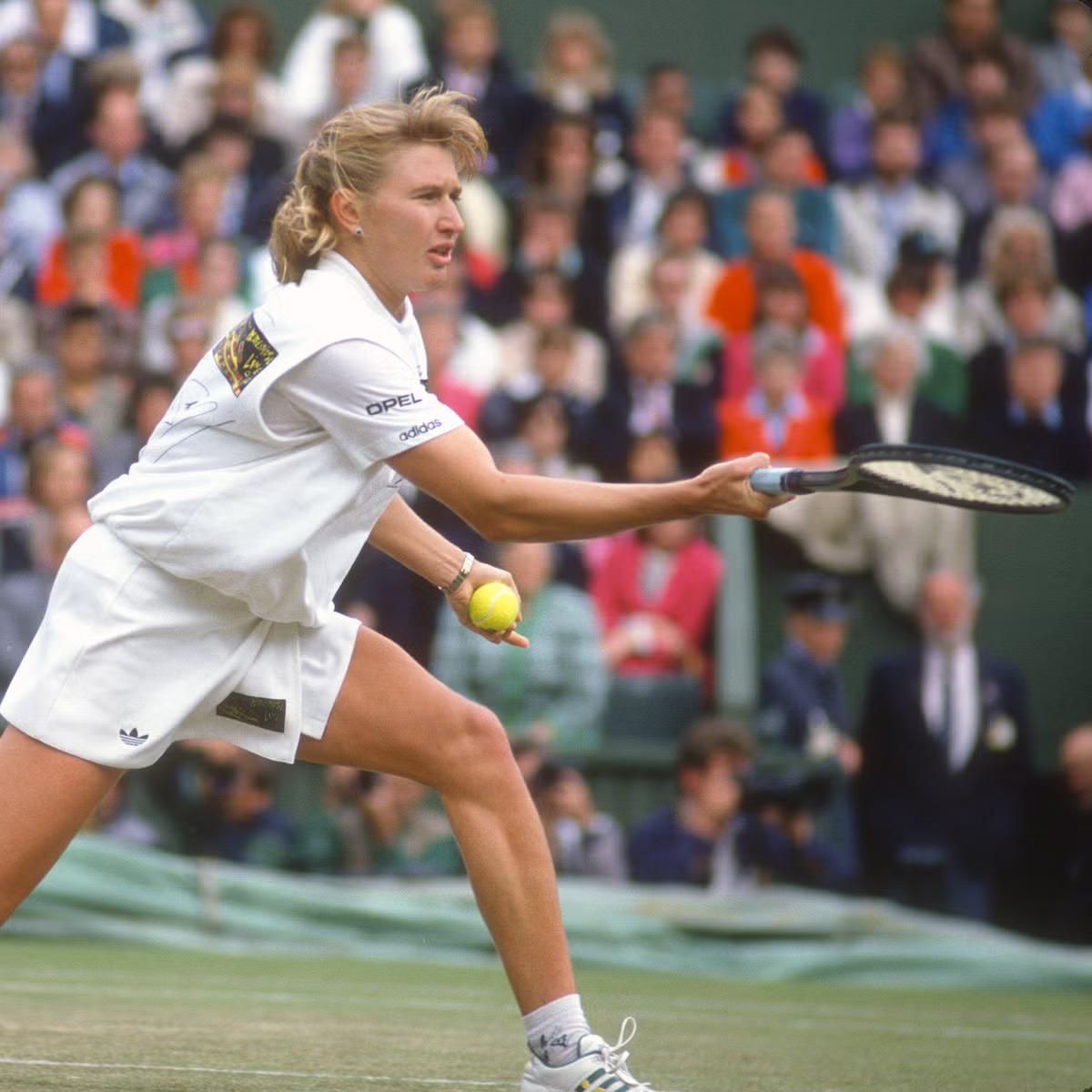
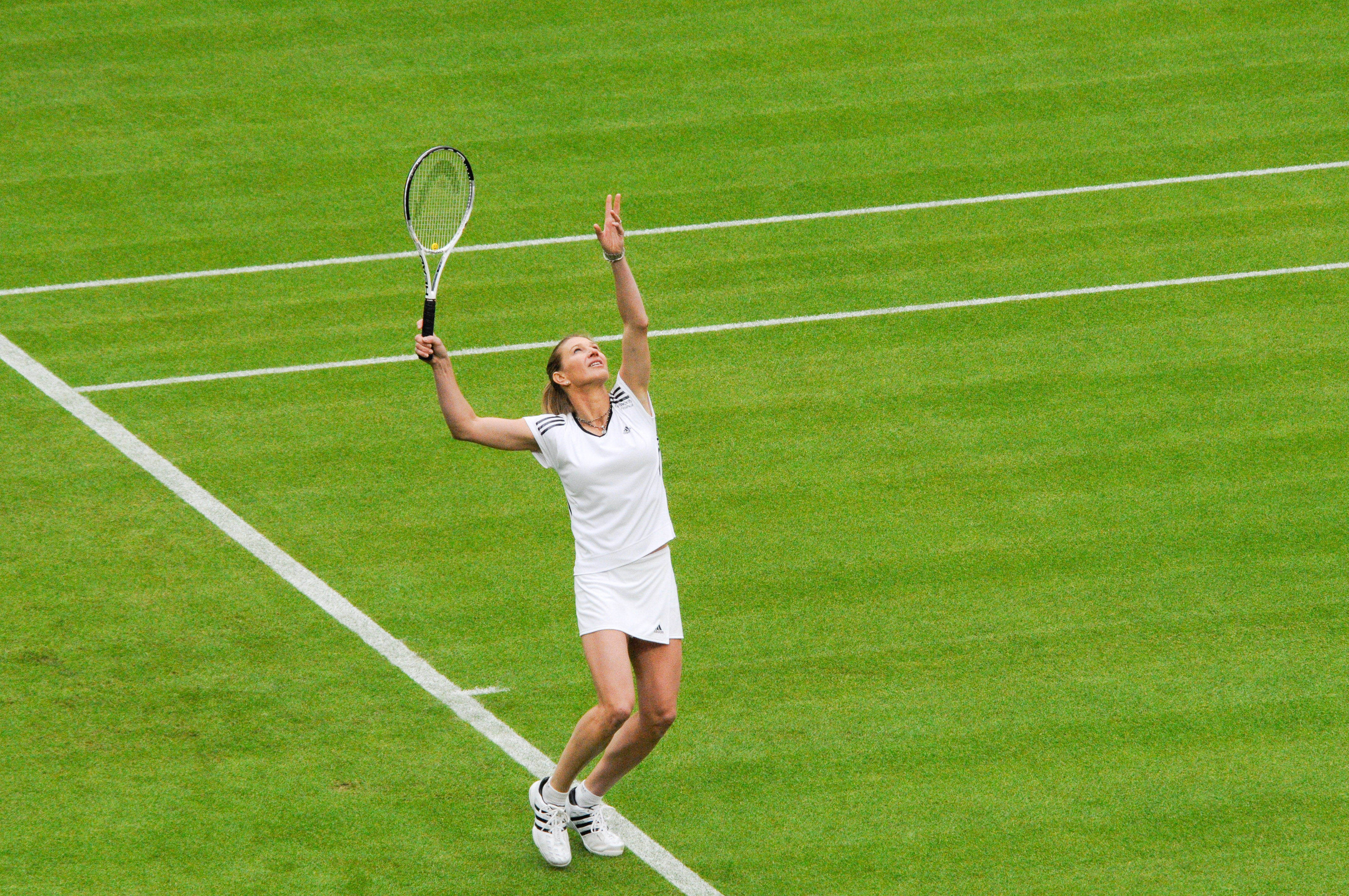
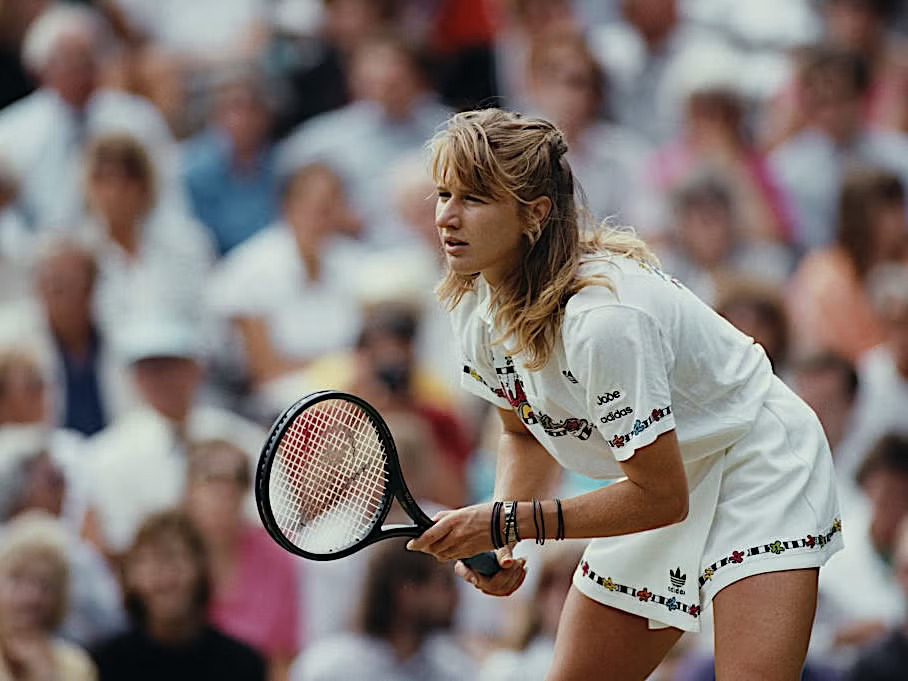
Steffi Graf is one of the defining champions in tennis history. Her explosive forehand, athletic movement and extraordinary versatility carried her to 22 Grand Slam singles titles, 107 career singles titles and a record 377 weeks as World No.1. In 1988 she achieved the unique Calendar Golden Slam by winning all four majors and Olympic singles gold in the same season.
Born in Brühl, West Germany, Steffi Graf turned professional in 1982 at the age of 13 and developed into one of the most complete players the sport has seen. Her game combined exceptional footwork, a devastating inside-out forehand, a penetrating serve and a low, controlled backhand slice that allowed her to dictate play on every surface.
Graf won her first Grand Slam singles title at Roland Garros in 1987 and reached World No.1 later that year. What followed in 1988 remains one of the most extraordinary seasons in tennis history: she won the Australian Open, Roland Garros, Wimbledon and the US Open, then added the Olympic singles gold medal in Seoul to complete the Calendar Golden Slam.
Her dominance continued across the next decade. Graf ultimately won four Australian Opens, six Roland Garros titles, seven Wimbledon championships and five US Opens. She spent 377 cumulative weeks at World No.1 and finished eight seasons as the year-end No.1, while her rivalries with Martina Navratilova, Monica Seles, Gabriela Sabatini and Arantxa Sánchez Vicario helped define multiple generations of women's tennis.
Graf's final major triumph came at Roland Garros in 1999, where she defeated Martina Hingis in a memorable final. She retired later that year with 107 singles titles and a legacy built on sustained excellence, adaptability and one of the most influential forehands in the history of the sport.
AGE202 Historical Archive
02 · Career
Careerat a glance.
The numbers behind the legend: ranking peaks, titles, dominance and longevity across an era.
Career high
#1
Highest recorded historical ranking
Career titles
107
Titles recorded in the AGE202 historical archive
Weeks at No.1
377
Weeks recognised at the top of the rankings
Year-end No.1
8
Seasons finished as the world's leading player
Olympic gold
1
Olympic singles gold medals
Era
—
Primary historical period represented
03 · Grand Slam Legacy
Majorchampionship record.
22 total
AO
4
Australian Open
Singles titles
RG
6
Roland Garros
Singles titles
W
7
Wimbledon
Singles titles
US
5
US Open
Singles titles
Major titles
22 Grand Slams
AGE202 historical major record
04 · Career Timeline
Moments thatshaped the legacy.
A chronological path through the defining seasons, breakthroughs and milestones that built this legend's place in tennis history.
7 milestones
1982
Historical marker
1982
Milestone 01
Turning Professional
A prodigy enters the international game
Steffi Graf turned professional in 1982 at the age of 13, beginning a career that would span seventeen seasons and redefine the standards of all-surface excellence in women's tennis.
1987
Historical marker
1987
Milestone 02
First Major and World No.1
The breakthrough season
Graf won her first Grand Slam singles title at Roland Garros in 1987 and later reached World No.1, establishing herself as the leading force of a new generation.
1988
Historical marker
1988Featured
Milestone 03
The Calendar Golden Slam
A season unmatched in tennis history
Graf won the Australian Open, Roland Garros, Wimbledon and the US Open in 1988 before capturing Olympic singles gold in Seoul. The five-title sweep created the only Calendar Golden Slam in tennis history.
1989
Historical marker
1989
Milestone 04
Sustained Global Dominance
Seven majors across two extraordinary seasons
After the Golden Slam, Graf continued her dominance in 1989 by winning the Australian Open, Wimbledon and US Open, confirming that 1988 had been the beginning of an era rather than a single historic peak.
1992
Historical marker
1992
Milestone 05
Olympic Silver and Fed Cup Glory
Success for Germany on the international stage
Graf won Olympic singles silver in Barcelona and helped Germany capture the Fed Cup in 1992, adding another significant international chapter to her career.
1995
Historical marker
1995
Milestone 06
Return to Major Supremacy
Wimbledon and New York reclaimed
Graf won Wimbledon and the US Open in 1995, returning to the centre of the major championship stage and beginning another period of dominance that continued into 1996.
1999
Historical marker
1999
Milestone 07
Final Roland Garros Crown
A last major triumph before retirement
Graf defeated Martina Hingis to win Roland Garros in 1999, claiming the 22nd and final Grand Slam singles title of her career. She retired later that year at the age of 30.
05 · Gallery
The imagesthat survived the era.
A visual archive of defining matches, trophies, rivalries and moments that became part of tennis history.
7 images
Archive 01
Archive 02
Archive 03
Archive 04
Archive 05
Archive 06
Archive 07
06 · Legacy
What remainsafter the victories.
Historical significance
Steffi Graf's place in tennis history rests on both unprecedented achievement and extraordinary completeness. Her 1988 Calendar Golden Slam remains unique: all four Grand Slam singles titles and Olympic singles gold in the same year. Across her career she won 22 major singles titles and at least four championships at every Grand Slam tournament.
Her influence was equally technical. Graf's speed, athletic court coverage and explosive forehand helped reshape the geometry of modern baseline tennis, while her ability to dominate on grass, clay and hard courts made her a benchmark for all-surface greatness. A record 377 cumulative weeks at World No.1 and eight year-end No.1 finishes underline the longevity of that dominance.
Beyond the statistics, Graf became one of the central figures in the global growth of women's tennis. Her rivalries, professionalism and sustained championship standard left an enduring model for the generations that followed.
“Power, precision and movement across every surface.”