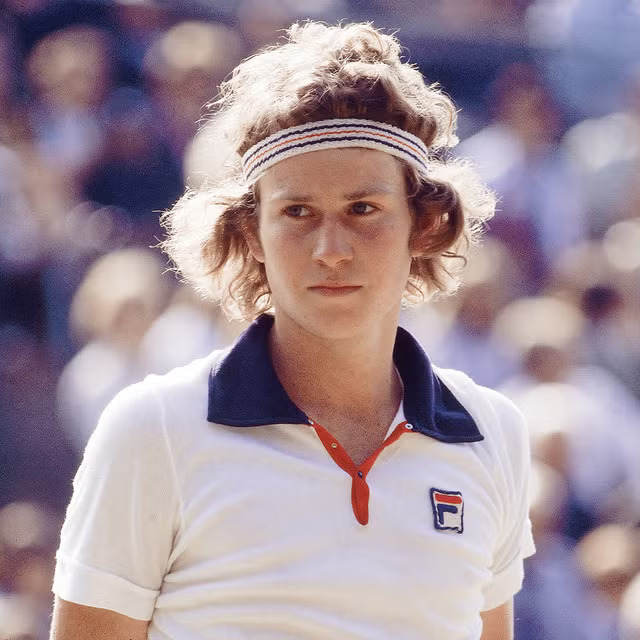
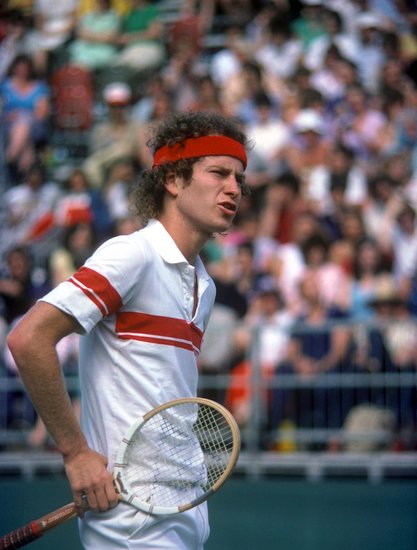
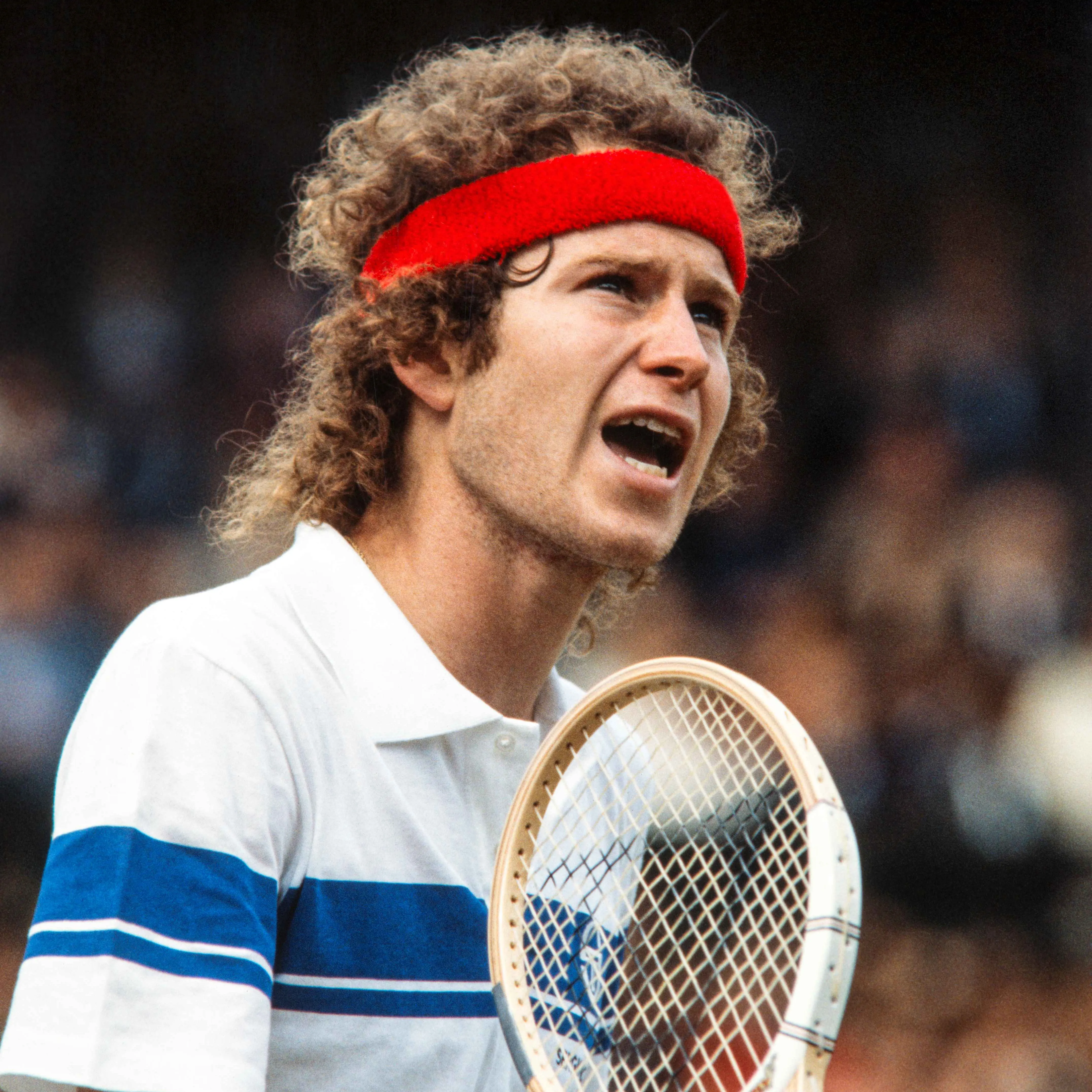
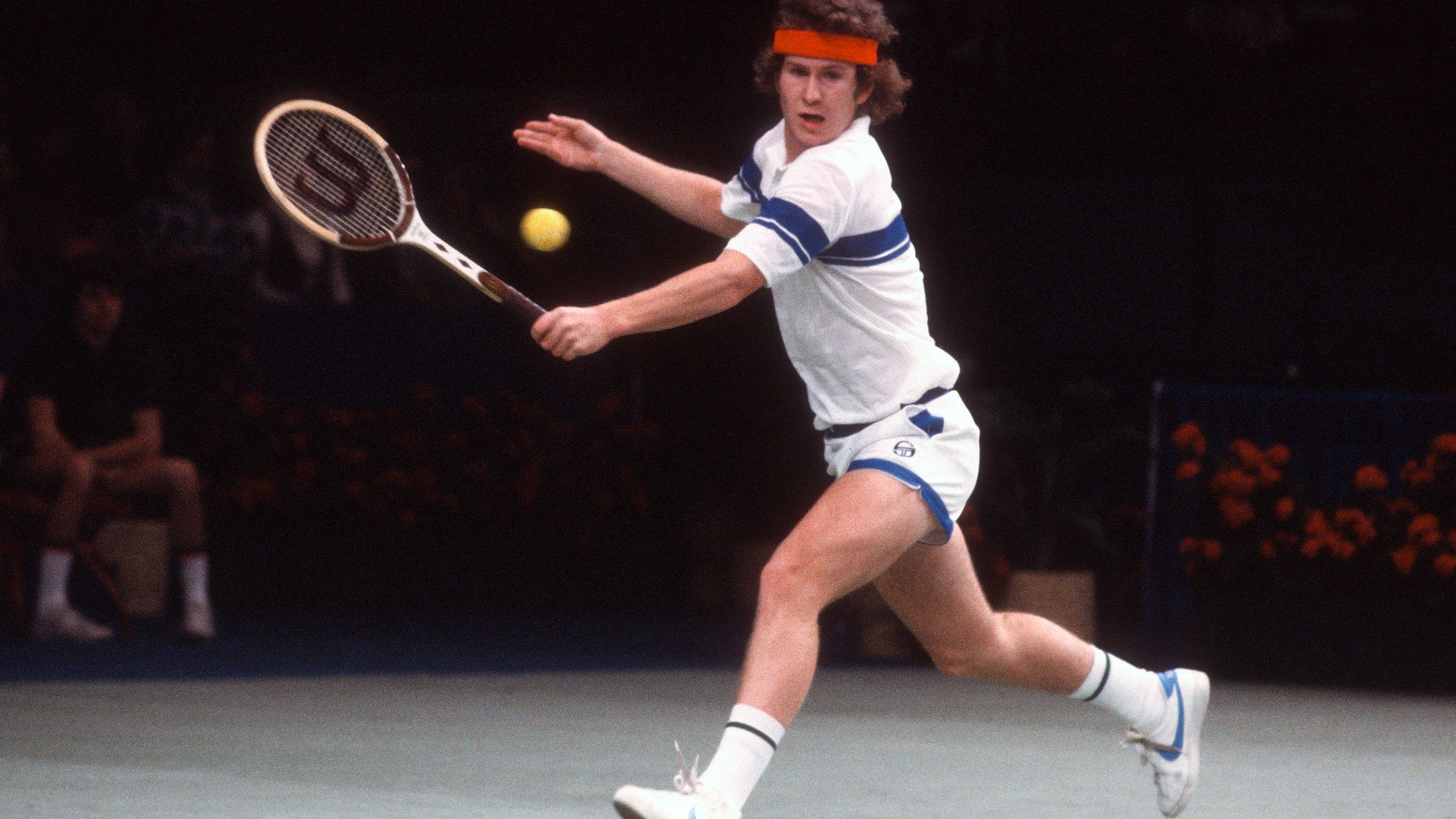
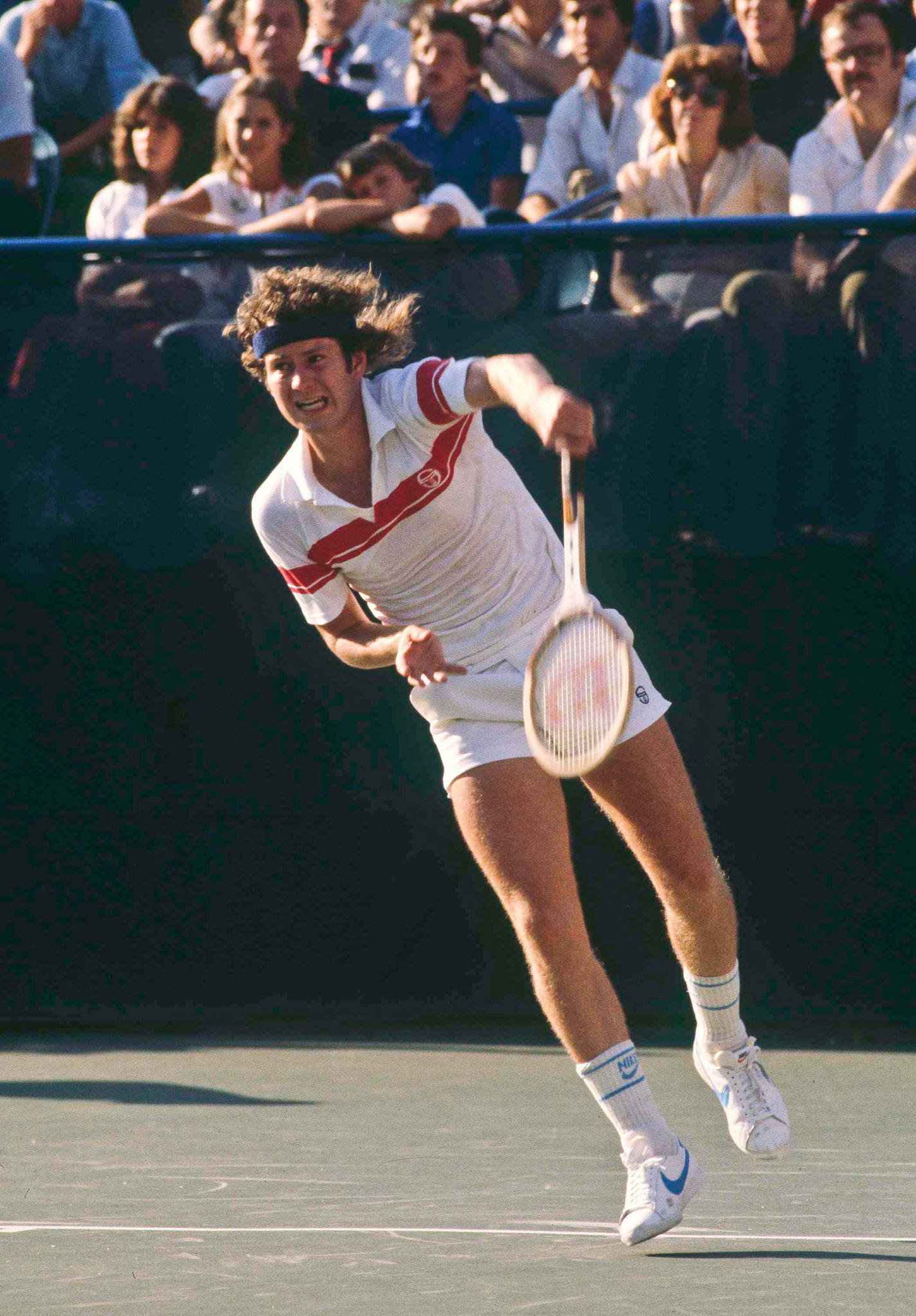
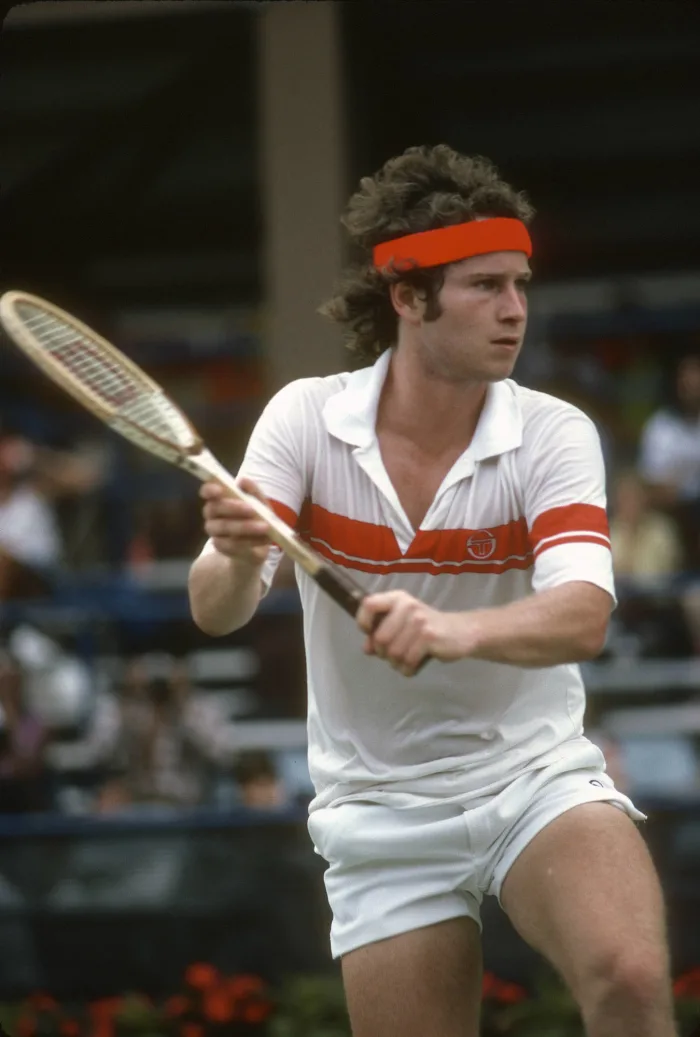
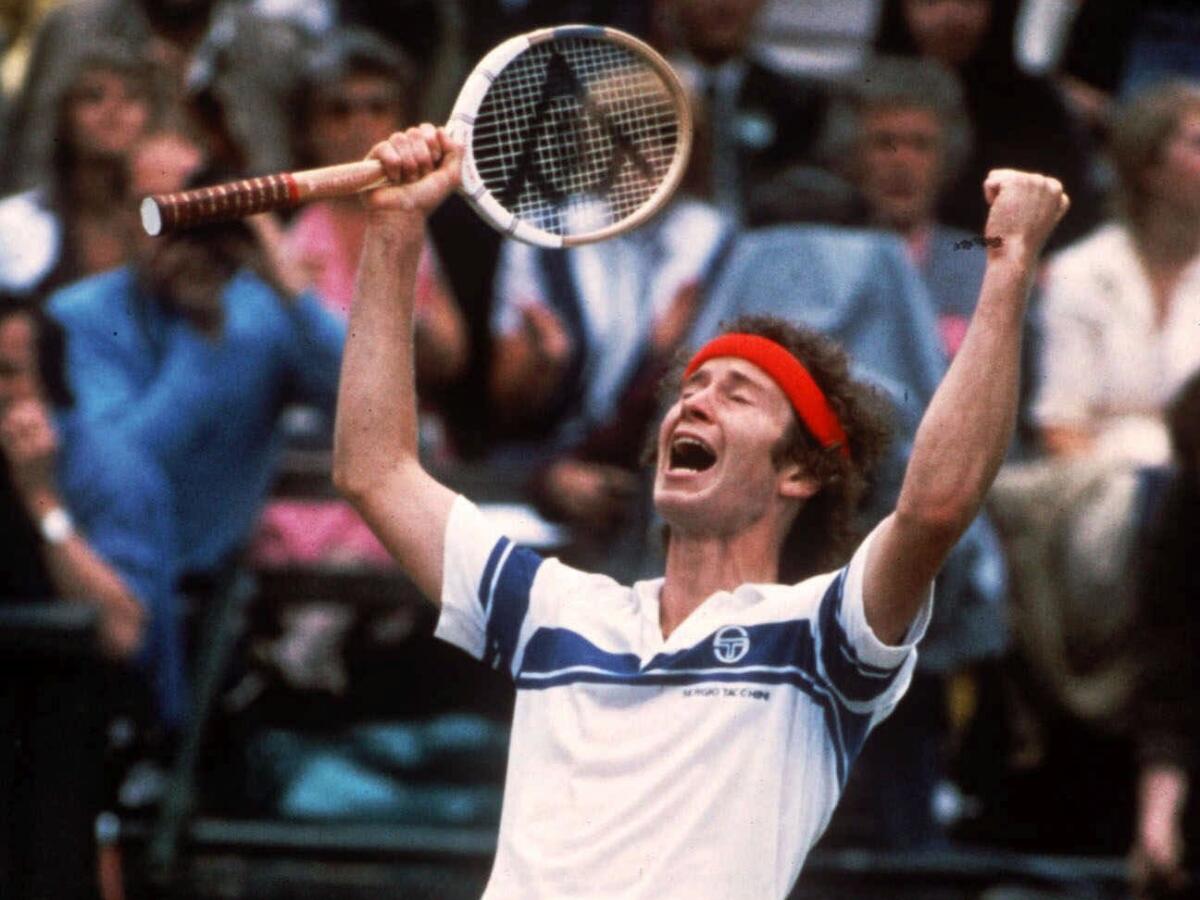
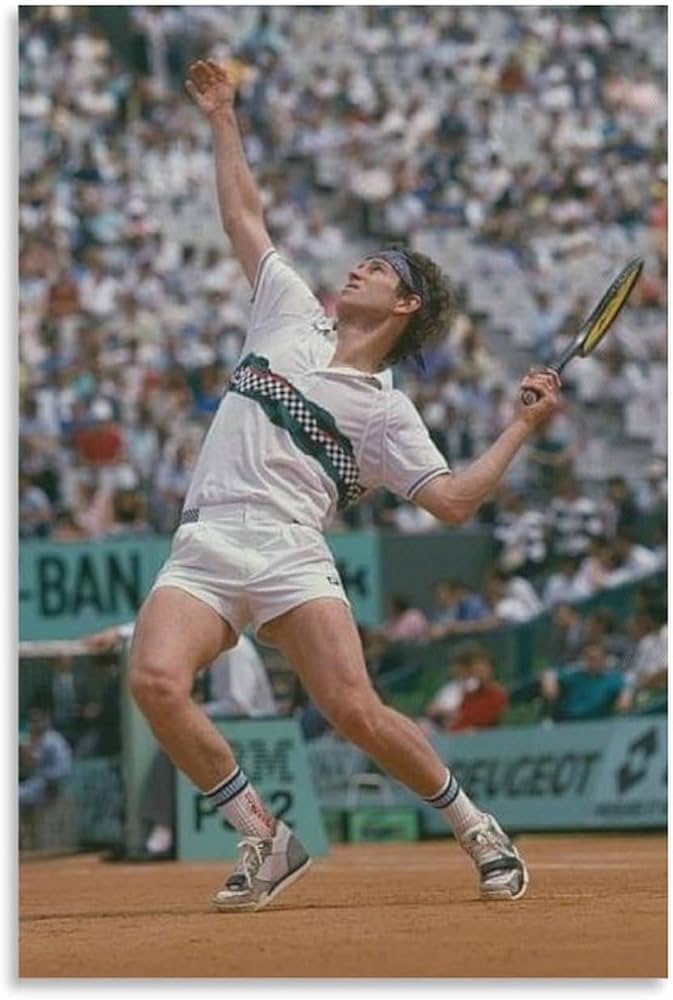
John McEnroe combined extraordinary touch, reflexes and attacking imagination with one of the most intense competitive personalities in tennis history. The American won seven Grand Slam singles titles, 77 tour-level singles titles and spent 170 weeks as World No.1, while also becoming one of the greatest doubles players of the Open Era.
Born in Wiesbaden, West Germany, and raised in New York, John McEnroe emerged as one of the most gifted attacking players of his generation. His compact service motion, exceptional hands and instinctive volleying allowed him to take time away from opponents in a way few players could match.
McEnroe announced himself internationally by reaching the Wimbledon semi-finals in 1977 as an 18-year-old qualifier. After winning the NCAA singles title for Stanford in 1978, he moved rapidly into the professional elite and captured his first Grand Slam singles title at the 1979 US Open.
His rivalry with Björn Borg became one of the defining stories of the sport. Their contrasting personalities and styles reached a peak in the 1980 Wimbledon final, where Borg survived McEnroe in five sets, and continued at the 1980 US Open, where McEnroe prevailed. In 1981 he defeated Borg at both Wimbledon and the US Open, signalling a shift at the top of men's tennis.
McEnroe finished four consecutive seasons as year-end World No.1 from 1981 through 1984. His 1984 campaign, highlighted by victories at Wimbledon and the US Open, is remembered as one of the finest seasons of the Open Era.
Beyond singles, McEnroe's doubles achievements were exceptional. His partnership with Peter Fleming became one of the most successful of its time, and his ability to excel simultaneously in singles and doubles made him a rare dual No.1. He retired from regular tour competition in 1992 with a career defined by artistry, confrontation, improvisation and relentless competitive intensity.
AGE202 Historical Archive
02 · Career
Careerat a glance.
The numbers behind the legend: ranking peaks, titles, dominance and longevity across an era.
Career high
#1
Highest recorded historical ranking
Career titles
77
Titles recorded in the AGE202 historical archive
Weeks at No.1
170
Weeks recognised at the top of the rankings
Year-end No.1
4
Seasons finished as the world's leading player
Olympic gold
0
Olympic singles gold medals
Era
—
Primary historical period represented
03 · Grand Slam Legacy
Majorchampionship record.
7 total
AO
0
Australian Open
Singles titles
RG
0
Roland Garros
Singles titles
W
3
Wimbledon
Singles titles
US
4
US Open
Singles titles
Major titles
7 Grand Slams
AGE202 historical major record
04 · Career Timeline
Moments thatshaped the legacy.
A chronological path through the defining seasons, breakthroughs and milestones that built this legend's place in tennis history.
7 milestones
1977
Historical marker
1977
Milestone 01
Wimbledon Breakthrough
An 18-year-old qualifier reaches the semi-finals
John McEnroe announced himself to the tennis world at Wimbledon in 1977, reaching the semi-finals as an 18-year-old qualifier and immediately revealing the touch and attacking instincts that would define his career.
1978
Historical marker
1978
Milestone 02
From Stanford to the Professional Tour
A college champion accelerates toward the elite
After winning the NCAA singles title with Stanford University in 1978, McEnroe entered the professional game and quickly established himself among the leading players of his generation.
1979
Historical marker
1979
Milestone 03
First US Open Crown
The first Grand Slam singles title
McEnroe won the US Open in 1979, capturing the first of his seven Grand Slam singles titles and beginning a run of dominance in New York that would produce four championships.
1980
Historical marker
1980
Milestone 04
World No.1 and the Borg Rivalry
The rivalry that defined a generation
McEnroe reached World No.1 for the first time in March 1980. Later that year, his epic Wimbledon final against Björn Borg and victory over Borg in the US Open final turned their rivalry into one of the defining stories of modern tennis.
1981
Historical marker
1981
Milestone 05
Wimbledon Champion
A changing of the guard
McEnroe defeated Björn Borg in the 1981 Wimbledon final and later beat him again in the US Open final. The two victories confirmed McEnroe as the dominant force at the top of men's tennis.
1984
Historical marker
1984Featured
Milestone 06
The Peak Season
One of the great campaigns of the Open Era
McEnroe produced the finest season of his career in 1984, winning Wimbledon and the US Open and finishing the year as World No.1 for the fourth consecutive season.
1992
Historical marker
1992
Milestone 07
The Final Tour Chapter
An extraordinary competitive career closes
McEnroe retired from regular tour competition in 1992, ending a career that had transformed attacking tennis and produced success at the highest level in both singles and doubles.
05 · Gallery
The imagesthat survived the era.
A visual archive of defining matches, trophies, rivalries and moments that became part of tennis history.
7 images
Archive 01
Archive 02
Archive 03
Archive 04
Archive 05
Archive 06
Archive 07
06 · Legacy
What remainsafter the victories.
Historical significance
John McEnroe remains one of tennis's most recognisable and influential figures because his game and personality were impossible to separate. His serve-and-volley style depended on anticipation, touch and improvisation rather than brute force, and his reflexes at net set a standard that still defines elite volleying.
His rivalry with Björn Borg helped propel tennis into a new global era, while later battles with Jimmy Connors and Ivan Lendl extended his place at the centre of the sport. McEnroe's seven Grand Slam singles titles, 170 weeks at World No.1 and four consecutive year-end No.1 finishes established the statistical foundation of his greatness.
Just as important was his versatility. McEnroe was a champion in both singles and doubles and became the first man to hold the No.1 ranking in both disciplines. His career showed that creativity, aggression and court intelligence could be every bit as decisive as power, leaving an enduring model for attacking tennis.
“Touch, instinct and competitive fire at the net.”